
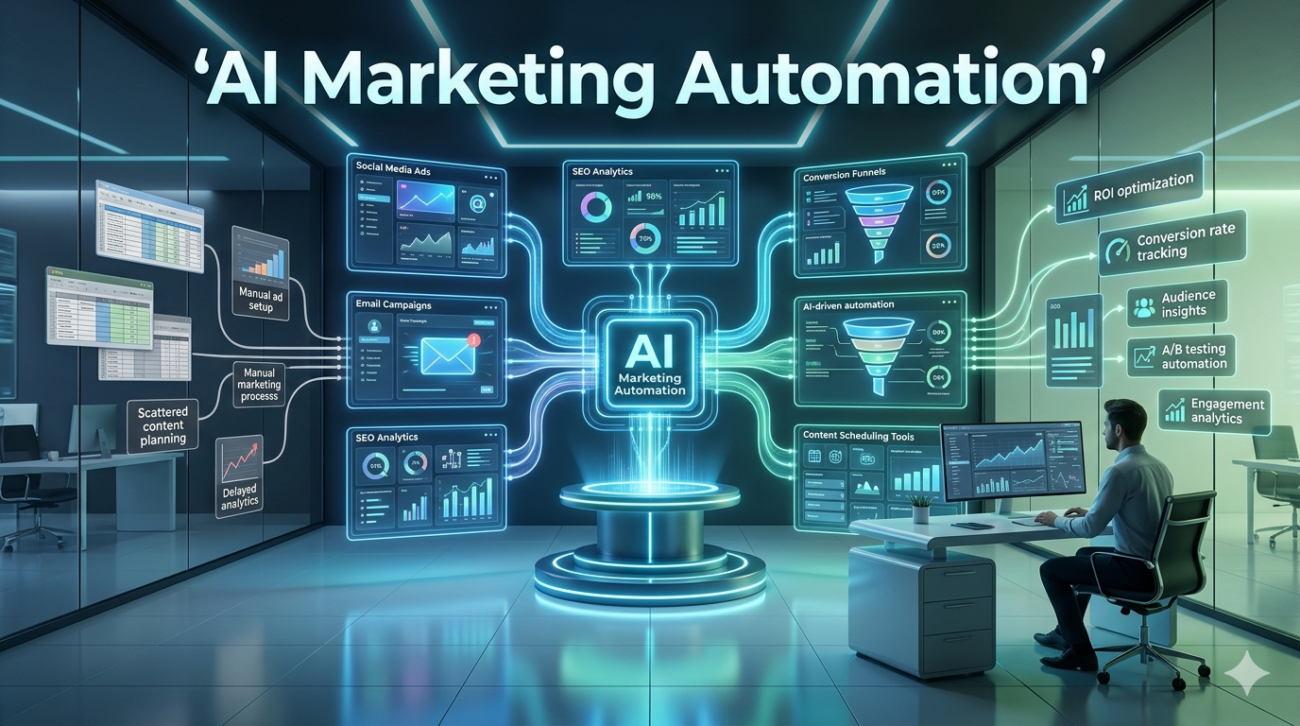
Over the past five years, I’ve watched marketing teams across industries e‑commerce brands, B2B SaaS startups, local service firms rethink how they spend time, money, and creativity. The common thread? AI marketing automation has moved from a buzzword on slide decks to a daily operational engine. It is no longer about replacing human judgment; it is about amplifying it letting machines handle the repetitive, data-heavy work so people can focus on strategy, storytelling, and relationship building.
In this article, I’ll walk through what AI marketing automation actually looks like in practice how it works, where it delivers measurable value, where it stumbles, and how seasoned teams keep it ethical and human-centered. The goal: a clear, experience‑driven picture you can apply immediately.
What “AI Marketing Automation” Really Means
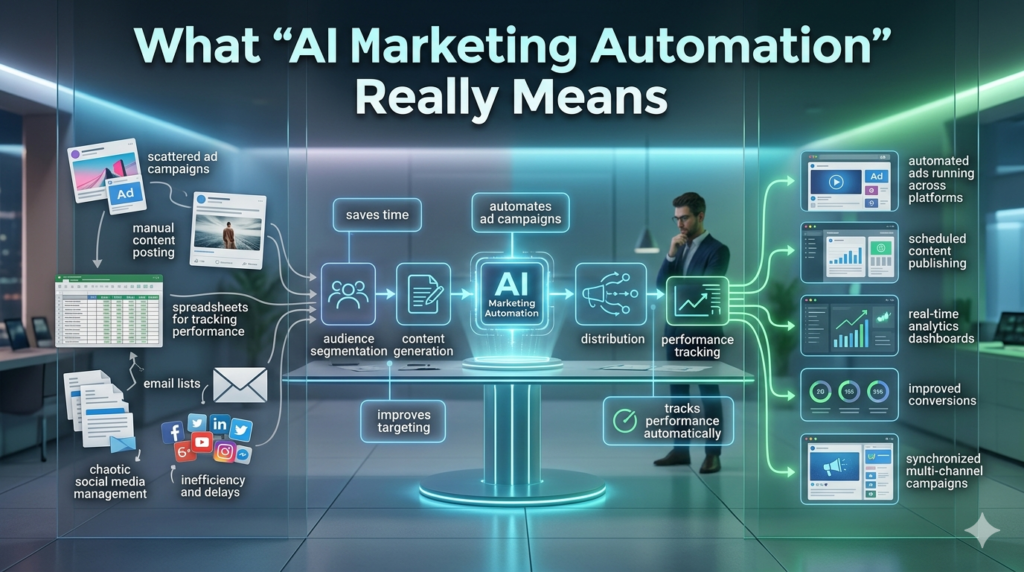
At its core, AI marketing automation = the combination of two things:
- Marketing automation platforms: (email sequences, web forms, CRM triggers, ad scheduling, analytics dashboards).
- Artificial‑intelligence layers: machine learning models that read data, predict behavior, generate copy, or optimize decisions in real time.
Unlike generic automation, the AI layer does more than follow pre‑written rules. It learns: it spots hidden patterns in customer behavior, forecasts which leads are most likely to convert, and even drafts messaging tailored to an individual’s past interactions. For example, a B2B software company I worked with last year ran a content‑download campaign. Their traditional automation sent the same follow‑up email to every downloader.
After layering a small AI engine on top of their marketing platform, the system analyzed which articles each user read, how long they stayed on the page, and which questions appeared in chat support then auto‑generated a personalized email suggesting a specific case study and a 15‑minute demo slot matching the user’s time zone. Conversion to a sales call rose 37% in 60 days.
That is the essence of AI marketing automation: context‑aware, predictive, and personalized at scale.
Key Use Cases Where It Delivers (and Where It Falls Short)
A. Predictive Lead Scoring
Most sales teams drown in hot and cold labels that are often wrong. AI models ingest:
- Website behavior: (pages viewed, scroll depth)
- Email engagement: (opens, replies, forward)
- CRM history: (past purchases, support tickets)
- Social signals: (LinkedIn activity, job title changes)
The model outputs a probability score not a label showing how likely a lead is to convert within 90 days.
Real case: A mid‑size fintech firm replaced its manual lead‑scoring spreadsheet with an AI model. The model flagged 23% more leads as high‑probability and those leads actually converted at 2.4× the rate of the previous manual list. The team no longer wasted sales hours on false positives.
Limitation: The model is only as good as the data. If the CRM is incomplete or events are mis‑tagged, scores become noisy. Constant data cleaning remains a human job.
B. Personalized Email & Content Delivery
AI no longer just merges names into templates. Modern engines generate entire email blocks, subject lines, and even product recommendations based on user behavior. One e‑commerce brand (home‑décor retailer) ran A/B tests: one segment got static you may like emails; another got AI‑generated copy referencing the exact items they viewed, the time of day they browsed, and seasonal trends. Open rates jumped from 11% to 19%, and click‑throughs rose 44%. The secret wasn’t the AI’s creativity it was the micro‑context: We noticed you looked at modern pendant lights at 10 p.m. last Tuesday here are three models in your price range, shipped same‑day.
Ethical note: Personalization must respect privacy. Transparent opt‑in language, clear data‑use policies, and easy opt‑out links are non‑negotiable. Users feel exploited when they sense every click is being sold; they flourish when they feel understood.
C. Ad Optimization Across Channels
AI marketing automation now sits inside ad platforms (Google Ads, Meta, LinkedIn) to adjust bids, creative, and targeting while the campaign is running.
A SaaS company selling project‑management tools ran a multi‑channel campaign. The AI layer continuously:
- Shifted budget from low‑performing creatives to those with rising CTR.
- Tweaked audience segments based on conversion delay (e.g., B2B buyers need more touchpoints).
- Predicted which geo‑regions would yield the best CAC within the next 72 hours.
Over a three‑month period, CAC dropped 28%, and ROAS more than doubled — all without human manual bid changes.
Where it stumbles: In early stages, with low data volume, the AI can over‑react to noise — shifting budget to a fluke performer. Teams must set guardrails (minimimum data thresholds, budget caps, creative diversity rules).
D. Chatbot & Conversational Marketing
AI‑driven chatbots are no longer script‑bound menus. Modern models understand intent, memory, and context across a conversation.
A local dental clinic replaced its static “book an appointment” widget with an AI chatbot that:
- Asked about pain symptoms, past treatments, and insurance
- Scheduled slots based on dentist availability and patient preference (morning vs. evening)
- Escalated complex cases directly to a human dentist with a full conversation log
Appointment bookings rose 31%, and no‑show rates fell 15% because the bot filtered out trivial queries and routed real concerns instantly.
Human element: The clinic still trained its staff to hand off conversations with a warm summary preserving trust.
The Hidden Costs & Risks (What No One Talks About)
After running dozens of AI‑automation pilots, three pitfalls repeat:
- Data Garbage In, Garbage Out
If your CRM is messy, your email logs are missing timestamps, or your ad data is duplicated the AI will learn noise. Investing in data hygiene pre‑AI saves more time than any model fine‑tuning. - Over‑Automation = Alienation
Customers detect when every interaction feels algorithmically generated. A balance is key: use AI for enhancement, not replacement of human tone. A well‑timed personal note from a real person, after an AI‑triggered email, boosts loyalty more than either alone. - Ethical & Regulatory Pressure
GDPR, CCPA, and emerging AI‑transparency laws require clear explanations of automated decisions (especially in credit, hiring, or high‑stake B2B sales). Teams must log model decisions, keep audit trails, and be ready to justify scoring or content generation to a customer or regulator.
How to Build a Sustainable AI Marketing Automation Stack (Practical Roadmap)
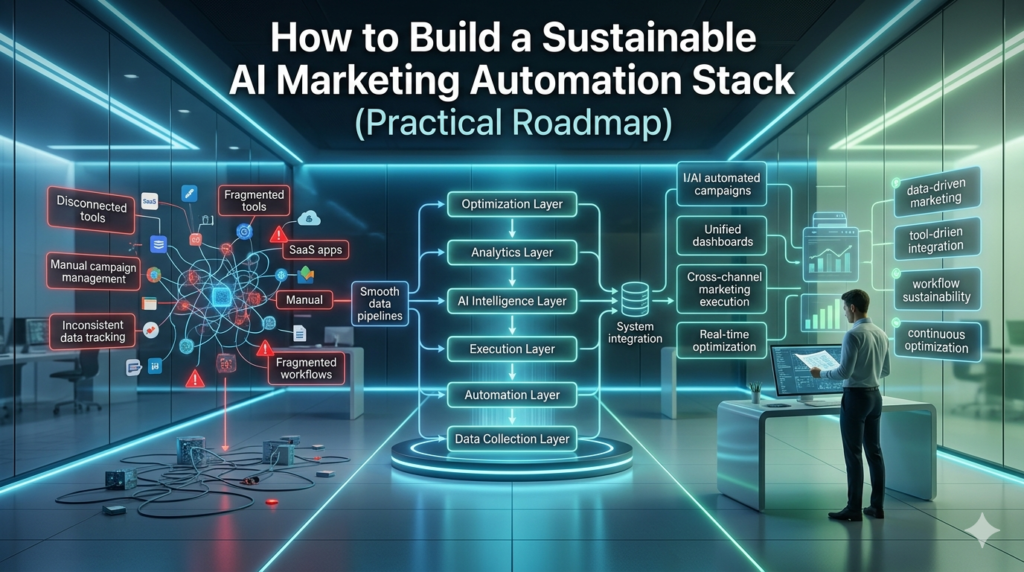
Based on real deployments:
- Start with one channel: email or ads where data is rich and volume is steady.
- Clean your data first. Run a 2‑week audit: fix duplicate contacts, complete missing fields, align event timestamps across tools.
- Choose a platform with native AI layers: (e.g., HubSpot, Market, ACTIVE Campaign, or specialized tools like Phrase, Persad). Avoid bolting on separate ML models unless you have in‑house data science talent.
- Set guardrails: maximum automation per customer, human‑in‑the‑loop thresholds, and clear opt‑out pathways.
- Measure beyond surface metrics: Track customer sentiment, time‑to‑conversion, and sales team satisfaction not just open rates or CTR.
- Iterate quarterly: AI models decay; markets shift. Re‑train on new behavior every 60–90 days.
A B2C skincare brand I advised followed this route. After 4 months, their AI‑driven email + ad stack cut content production time by 60%, lifted revenue per email by 2.1×, and importantly their customer‑service team reported less friction because leads were pre‑qualified.
The Human Edge Why People Still Matter
AI marketing automation is a multiplier, not a replacement. The real competitive edge lives in:
- Strategic framing: deciding which customers to target, which messages to prioritize, and which channels to invest in.
- Narrative craft: stories, brand voice, and emotional resonance areas where machines still stumble.
- Ethical stewardship: deciding when to pause automation, when to reveal a human hand, and how to communicate data use.
The most successful teams treat AI as a co‑pilot handling the heavy lifting of pattern recognition while marketers guide purpose, values, and creativity.
FAQs
Q: Do we need a data science team to start AI marketing automation?
A: Not necessarily. Most modern marketing platforms offer built‑in AI modules that require only clean data and clear business rules. You can start with off‑the‑shelf models and graduate to custom models as data and budget grow.
Q: Will AI personalization make customers feel “spied on”?
A: Only if done opacity. Transparent privacy policies, explicit opt‑ins, and human touchpoints (a genuine note after an automated email) rebuild trust. Personalization rooted in help, not surveillance, feels useful not invasive.
Q: How long until we see ROI from AI marketing automation?
A: In most cases, 6–12 weeks after data cleanup and the first model deployment. Early wins usually appear in lead‑scoring accuracy or email engagement; revenue impact typically solidifies after 2–3 months of iterative tuning.
Q: What’s the biggest risk when scaling AI automation?
A: Data decay and model drift. As customer behavior evolves, models become outdated. Scheduled retraining and continuous data audits are non‑negotiable.
Q: Can small businesses afford AI marketing automation?
A: Absolutely cloud‑based platforms now offer tiered pricing. A solo marketer can start with email personalization or ad‑bid optimization at low monthly cost; scale only as results justify investment.
