
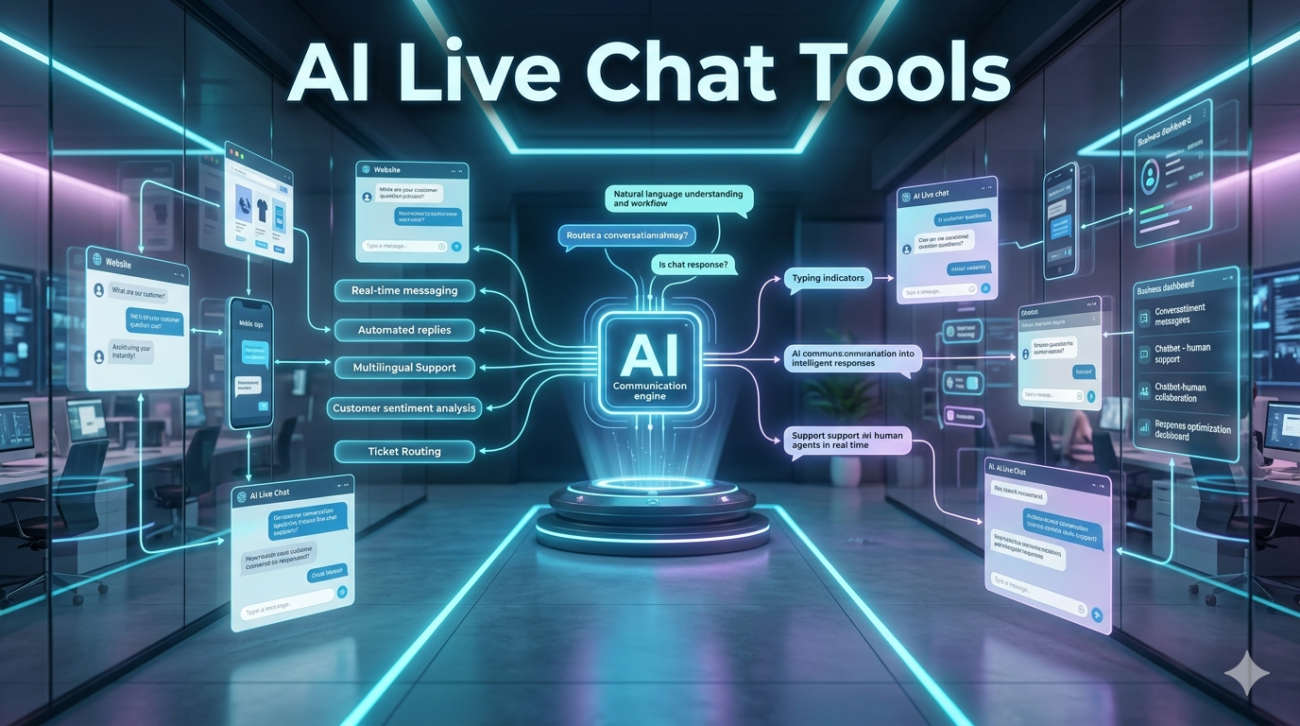
The digital landscape has fundamentally reshaped how businesses connect with their customers. Gone are the days of endless hold music or waiting 48 hours for an email response to a simple query. Today, speed and accessibility are king. That’s where AI live chat tools have truly come into their own, acting not just as a convenience, but as a critical component of a robust customer service strategy. From my vantage point, having navigated the evolving world of digital customer engagement for years, I’ve seen firsthand the transformative power of these intelligent systems.
It’s not just about slapping a chatbot on your website; it’s about strategically deploying artificial intelligence to enhance interactions, streamline operations, and ultimately, build stronger customer relationships. Let me take you through what I’ve learned about these fascinating tools.
What Exactly Are We Talking About? Demystifying AI Live Chat
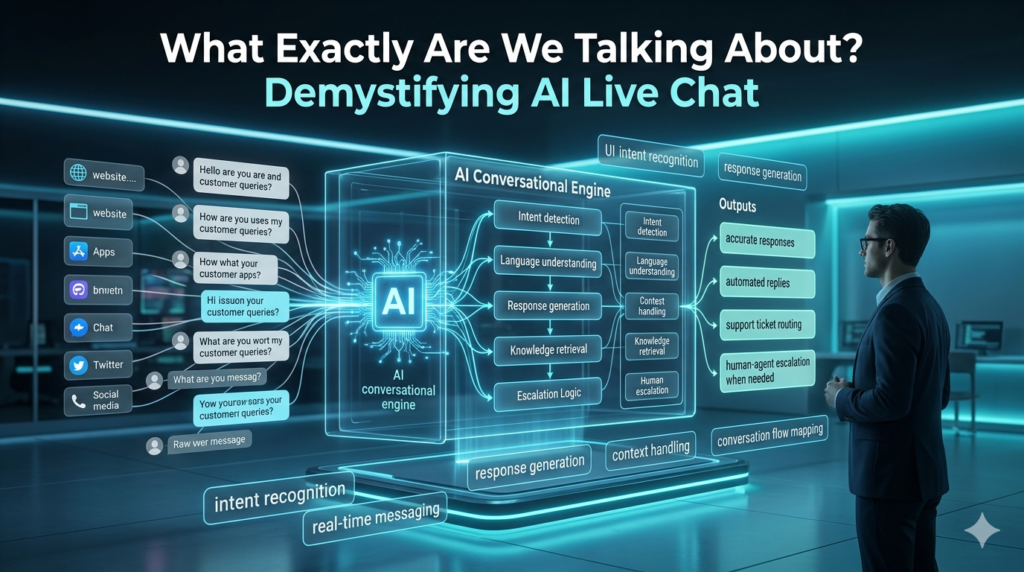
At its core, AI live chat is a customer service channel that allows instant, text-based communication between a business and its customers, but with a significant upgrade: artificial intelligence takes the wheel, at least initially. Unlike traditional live chat, where every interaction requires a human agent from start to finish, AI live chat software integrates sophisticated algorithms specifically, natural language processing (NLP) and machine learning (ML) to understand, interpret, and respond to customer queries automatically. Think of it this way: a traditional live chat is like having a human receptionist available during business hours.
An AI live chat is like having an exceptionally well-trained, tireless receptionist who knows your entire knowledge base by heart, works 24/7, and can seamlessly hand off to a human expert when things get tricky. The “AI” part is crucial; it means the system can not only follow predefined rules but also learn from past conversations, adapt to new information, and even infer user intent, moving beyond simple keyword matching to genuinely understand what a customer is asking.
The Unsung Heroes: Core Benefits That Drive Real Impact
When implemented thoughtfully, AI live chat tools deliver a suite of benefits that can genuinely redefine a company’s customer interaction model.
- 24/7 Availability, No Coffee Breaks: This is perhaps the most immediate and impactful benefit. Customers operate on their own schedules, not just yours. Whether it’s a late-night question about an order status or an early morning query from a different time zone, AI live chat ensures someone (or something) is always there to provide an instant response. This round-the-clock support is a massive win for customer satisfaction, reducing frustration and abandonment.
- Instant Gratification (and Resolution): We live in an age of instantaneity. Long wait times are a major pain point. AI-powered chat can answer common questions in seconds, resolving issues before a customer even has a chance to consider calling or emailing. This immediate feedback loop is incredibly powerful.
- Scalability That Doesn’t Break the Bank: Imagine a sudden surge in customer inquiries a flash sale, a product launch, or even a global event. Hiring and training human agents for such peaks is impractical and expensive. AI live chat can handle hundreds, even thousands, of simultaneous conversations without breaking a sweat, ensuring consistent service delivery without ballooning operational costs.
- Empowering Human Agents for What They Do Best: This is where the magic truly happens for your team. By automating responses to repetitive, frequently asked questions (FAQs) “What’s your return policy?” “How do I track my package?” AI frees up your human customer support agents. They can then focus their valuable time and expertise on more complex, nuanced, or emotionally charged issues that genuinely require human empathy and problem-solving skills. This leads to higher job satisfaction for agents and better outcomes for customers.
- A Goldmine of Data Insights: Every interaction processed by an AI live chat tool is a data point. This rich stream of information what customers are asking, common pain points, emerging trends, popular products can be invaluable. Businesses can use these insights to refine their products, improve their website content, preemptively address issues, and even inform marketing strategies.
- Personalization at Scale: With integrations to CRM systems, AI live chat can access customer history, purchase records, and preferences. This allows for truly personalized interactions, like addressing a customer by name, referencing a previous purchase, or offering relevant product recommendations, all without human intervention.
More Than Just Chatbots: Practical Applications and Use Cases
From my experience, the versatility of AI live chat goes far beyond simply answering FAQs. Here are a few ways I’ve seen it effectively deployed:
- First-Line Support & Triage: Acting as the initial point of contact, handling common queries, troubleshooting basic issues, and efficiently routing complex cases to the appropriate human department (sales, technical support, billing).
- Lead Qualification & Nurturing: Engaging website visitors, asking qualifying questions about their needs and budget, and then connecting them with the right sales representative or even scheduling a demo automatically. This streamlines the sales funnel dramatically.
- Onboarding & Product Guidance: Guiding new users through product setup, explaining features, or providing step-by-step instructions.
- Feedback Collection: Prompting users for quick feedback after an interaction or after they’ve used a specific feature, offering valuable insights for continuous improvement.
- Proactive Engagement: Reaching out to visitors on specific pages (e.g., pricing page, checkout) to offer assistance or answer potential questions, reducing cart abandonment.
A Look Under the Hood: How it Works (Without Getting Too Technical)
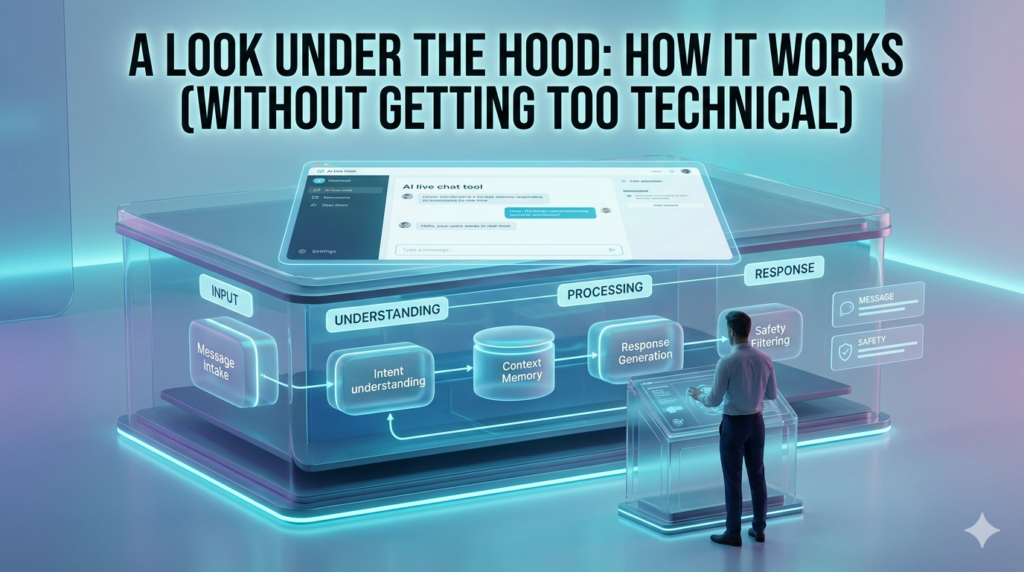
The core mechanism of AI live chat relies on a few key components. Firstly, there’s training data. This is the foundational knowledge base your FAQs, product manuals, previous customer interactions, and policy documents. The AI learns from this data. Secondly, Natural Language Processing (NLP) enables the AI to understand the meaning and intent behind human language, even with variations in phrasing, slang, or typos. It can discern that “How much does it cost?” “Price please,” and “What’s the tag on this?” all refer to pricing information. Thirdly, Machine Learning (ML) algorithms allow the AI to improve over time.
The more interactions it handles, and the more feedback it receives (both explicit corrections and implicit success/failure rates), the smarter and more accurate its responses become. Finally, the best AI live chat tools include a seamless handover mechanism, ensuring that if a query becomes too complex, emotional, or requires specific human judgment, it’s immediately and gracefully transferred to a human agent, often with the AI providing context from the prior conversation.
The Nuances and Limitations: It’s Not Magic (And That’s Okay)
While incredibly powerful, it would be disingenuous to paint AI live chat as a silver bullet. Like any technology, it has its limitations, and understanding them is crucial for successful implementation.
- Initial Setup & Training is an Investment: It’s not a set it and forget it solution. The AI needs to be trained, and this requires time, effort, and quality data. If you feed it garbage, you’ll get garbage in return.
- Lack of Genuine Empathy & Emotional Intelligence: AI is brilliant at processing information, but it can’t genuinely feel or express empathy. For highly emotional or sensitive customer issues, the robotic nature of even the most sophisticated AI can be frustrating. This is precisely why the human handover is so vital.
- Handling Ambiguity & Novelty: If a customer asks a question that hasn’t been part of its training data, or if the query is extremely ambiguous, the AI can struggle. It might offer a generic response or simply state it doesn’t understand, which can be a stumbling block.
- Ongoing Maintenance is Key: The business world is dynamic. Products change, policies evolve, and new questions emerge. The AI’s knowledge base needs continuous updating and refinement to remain effective.
- Data Privacy and Security: Integrating AI live chat, especially with CRM systems, means handling sensitive customer data. Robust security protocols and compliance with regulations like GDPR or CCPA are non-negotiable.
Best Practices for Implementation: Learning from the Field
Having navigated numerous implementations, I’ve distilled a few key principles that differentiate success from frustration:
- Define Clear Goals First: What problem are you trying to solve? Reduce wait times? Qualify more leads? Free up agents? Having clear objectives will guide your strategy.
- Start Small, Iterate, and Expand: Don’t try to automate everything on day one. Begin with common FAQs or a specific process (like order status checks). Gather data, refine the AI’s responses, and then gradually expand its scope.
- Build a Rock-Solid Knowledge Base: The AI is only as smart as the information it can access. Invest in a comprehensive, well-structured, and regularly updated knowledge base. This is the AI’s brain.
- Prioritize the Human Handoff: Make it incredibly easy and obvious for a customer to request a human agent. And ensure your human agents are ready to pick up the conversation seamlessly, ideally with full context from the AI interaction.
- Monitor, Analyze, and Improve Continuously: Regularly review chat transcripts. Identify where the AI struggles, where it excels, and what new questions are emerging. Use these insights to retrain the AI and improve its performance.
- Be Transparent: Let your customers know they’re interacting with an AI. A simple “Hi, I’m your virtual assistant!” at the start sets expectations and builds trust.
The Real-World Impact: An E-commerce Story
Consider a medium-sized online fashion retailer I worked with. Before implementing AI live chat, their customer service channels were overwhelmed. Phone lines were jammed, and email response times stretched to 24-48 hours, especially after marketing campaigns. Simple questions like “What’s your return policy?” or “Is this item in stock?” consumed valuable agent time. We deployed an AI live chat tool, starting with the most common 20% of their inquiries. Initially, it was a bit clunky; the AI sometimes misunderstood phrases or gave generic answers. But through consistent monitoring, refining its training data, and improving the handoff protocol, things transformed.
Within six months, they saw a 40% reduction in simple queries handled by human agents, freeing those agents to tackle complex sizing questions, style advice, or order modifications. Customer satisfaction scores for quick answers jumped by 15%, and, interestingly, they started qualifying more leads for their sales team directly through chat, converting hesitant browsers into buyers. It wasn’t perfect, and required ongoing attention, but the operational efficiency and improved customer experience were undeniable.
The Future is Bright, But the Human Touch Endures
AI live chat tools are undoubtedly a cornerstone of modern customer service, constantly evolving with advancements in AI. They represent a powerful shift towards proactive, efficient, and personalized customer interactions. However, it’s vital to remember they are tools to augment, not replace, human connection. The most successful strategies I’ve seen are hybrid models, where AI handles the routine, and humans provide the empathy, creativity, and nuanced problem-solving that only we can offer. The future of customer service is a symphony of artificial intelligence and genuine human understanding, working in concert to deliver an unparalleled customer experience.
FAQs
Q: What is AI live chat?
A: AI live chat is a customer service channel that uses artificial intelligence (AI) to understand and respond to customer queries instantly, often automating initial interactions and routing complex issues to human agents.
Q: How does it differ from a regular chatbot?
A: While all AI live chats are chatbots, not all chatbots use advanced AI. AI live chat leverages natural language processing (NLP) and machine learning to understand intent and learn over time, offering more sophisticated and adaptable responses than rule-based chatbots.
Q: What are the main benefits of using AI live chat?
A: Key benefits include 24/7 customer availability, instant responses, scalability to handle high volumes, cost efficiency, improved productivity for human agents, valuable data insights, and personalized customer interactions.
Q: Can AI live chat handle complex issues?
A: AI is best suited for common, repetitive queries. While it can guide users through troubleshooting, it typically hands off complex, emotionally charged, or unique issues to a human agent who can provide nuanced understanding and empathy.
Q: Is it expensive to implement AI live chat?
A: Initial setup requires an investment in software, training the AI with your data, and potentially integrating it with existing systems. However, it often leads to significant long-term cost savings by reducing agent workload and improving efficiency.
Q: Will AI live chat replace human customer service agents?
A: No, AI live chat is designed to augment and empower human agents, not replace them. It automates routine tasks, allowing humans to focus on complex, high-value interactions that require critical thinking, creativity, and empathy.
