
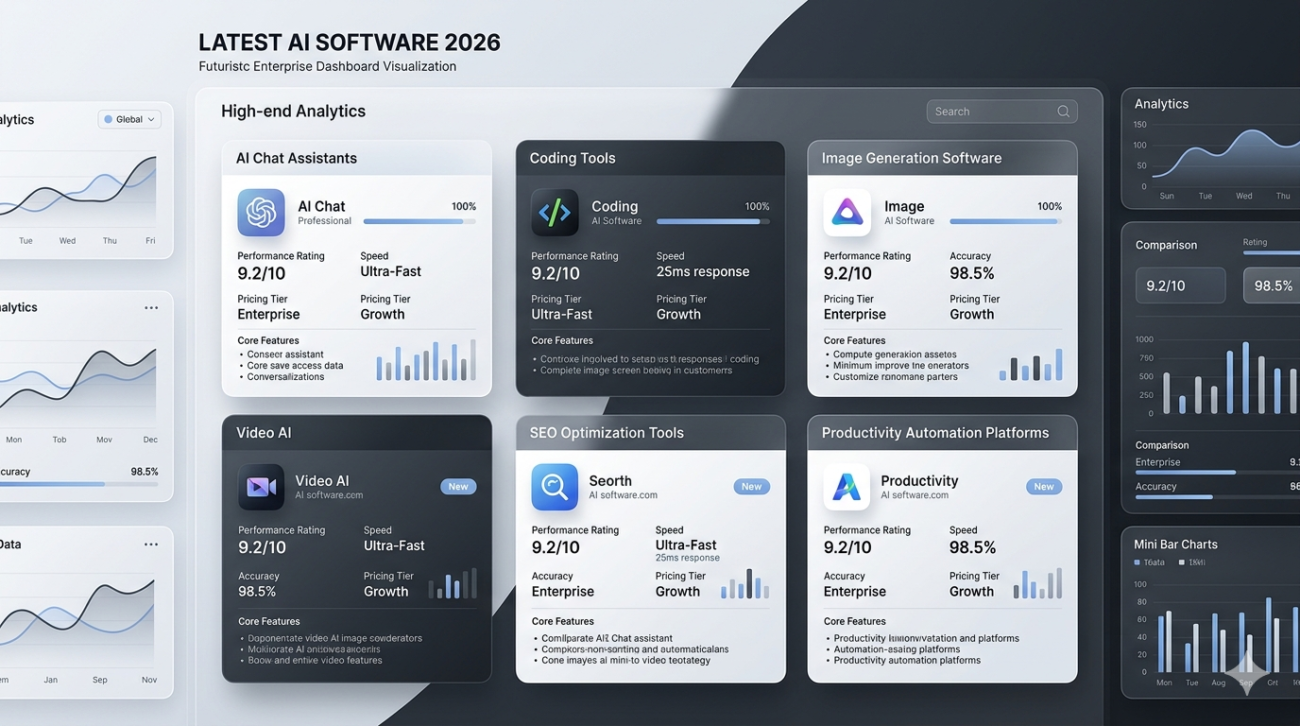
I’ve been watching the AI landscape shift dramatically over the past eighteen months, and honestly, it’s getting harder to keep track of what’s genuinely useful versus what’s just another overhyped tool making promises it can’t deliver. The latest AI software announcements seem to drop almost weekly now, but beneath the noise, there are a few technologies that are legitimately transforming workflows across industries.
Let me start with what I’m actually seeing people use effectively in their daily work, because there’s a massive gap between what gets the most press coverage and what actually solves problems.
The Practical Wave: Beyond Simple Chatbots
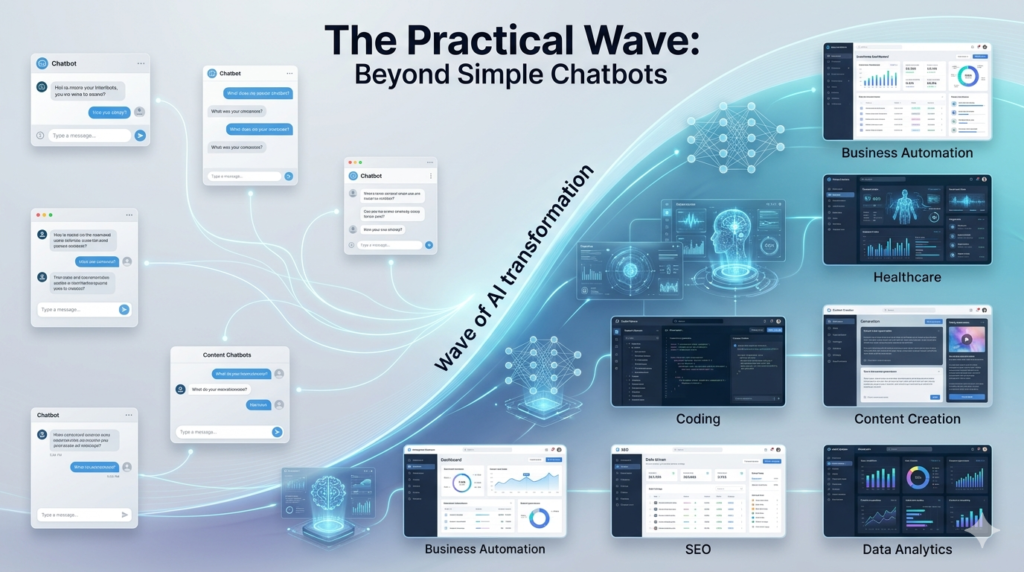
When ChatGPT first exploded onto the scene, everyone treated it like the second coming. Today, the conversation has matured significantly. The latest iterations of large language models including Claude 3.5, GPT-4o, and Gemini 2.0 have moved beyond being impressive party tricks. They’re becoming genuinely embedded in professional workflows. What’s changed isn’t just the base capabilities, though those have improved. It’s the integration layer. The AI software that’s actually moving adoption needles right now focuses on specific problems rather than general conversation.
I’ve watched marketing teams adopt specialized AI tools for competitive analysis, developers using Cursor and GitHub Copilot X for code generation, and legal firms experimenting with contract review systems. The difference between “interesting AI” and “AI that sticks around” comes down to whether it saves time on work people actually hate doing. That’s not profound, but it’s surprisingly predictive.
Real Breakthroughs in Multimodal AI
One area where I’m seeing genuine progress is multimodal processing software that can handle text, images, audio, and video together. OpenAI’s GPT-4o Vision update changed things more than people realize. Not because it’s perfect at understanding images, but because it handles mixed input reliably enough that workflows can be genuinely redesigned around it. I tested this myself with a product photography project. Instead of separately uploading images and describing them, I could hand the AI a batch of photos with written specifications and get coherent analysis back.
It made mistakes the color detection wasn’t always accurate but it was fast enough that human verification took less time than the old manual process. The emerging reality with multimodal AI is that it enables different approaches to problems, even if the AI itself isn’t superhuman at any single task. That’s subtly different from what the marketing messages suggest.
Enterprise AI Moves Quietly
The most significant shifts I’m tracking aren’t happening in consumer products. They’re happening in enterprise software. Salesforce integrated AI throughout its platform. Microsoft embedded AI into Office applications. Adobe built generative capabilities into Firefly and Creative Cloud. These aren’t exciting announcements they’re boring integration stories but they’re where AI actually changes how millions of people work. The enterprise AI moves are important because they don’t require people to change their fundamental workflow.
If you’re already using Excel, and Excel suddenly suggests formulas or analyzes trends through natural language prompts, adoption is high. You’re not asking someone to learn a new tool; you’re just adding capability to existing tools. This explains why specialized AI software companies are struggling compared to platforms that could integrate AI into products people already use daily.
The Honest Assessment on Limitations
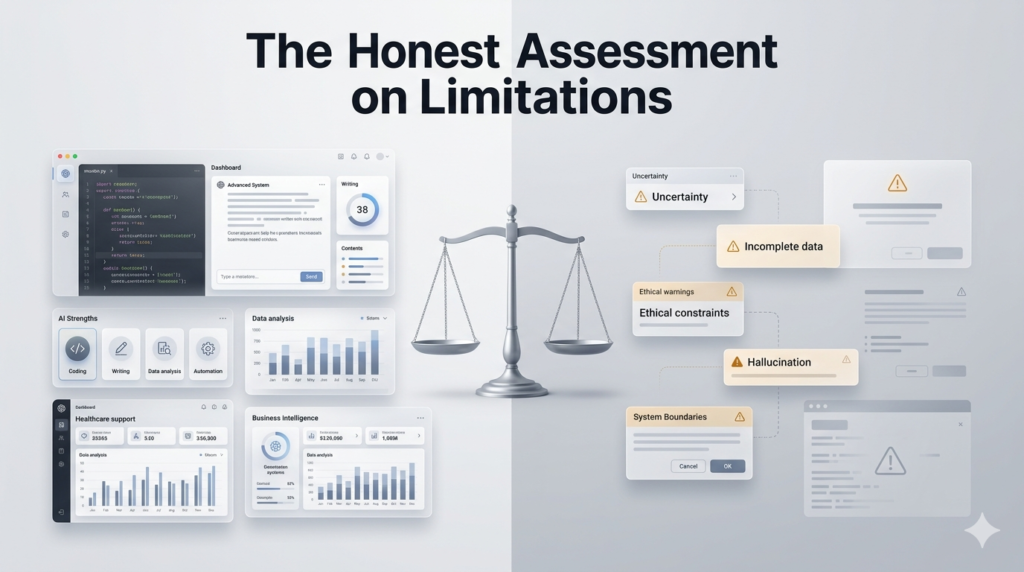
Here’s what responsible conversation about AI software should include but often doesn’t: significant remaining limitations that affect real deployment. Hallucinations where AI confidently produces false information remain a core issue. I’ve tested every major model this year, and they all do this. Some less than others, but none have solved it. This means any deployment of current AI software requires human verification for factual claims. That’s not a minor limitation when you’re considering its value for replacing knowledge work. Reasoning over long documents still struggles. I tried having an AI system analyze a 50-page technical document, extract specific requirements, and identify contradictions.
It got most of the way there, but missed subtle conflicts that a human reviewer caught. The AI was good enough to be useful as a first-pass tool, not good enough to be a complete replacement. Cost-effectiveness varies wildly depending on the use case. API calls add up quickly, and the math on whether AI saves money versus hiring additional staff depends heavily on the specific problem. Some organizations are discovering that their AI implementation costs more than it saves, particularly if they’re paying for enterprise support and integration work.
What’s Actually Gaining Traction
Based on what I’m observing in actual deployments, these categories of AI software are seeing real adoption:
Code generation and development tools remain the clearest success story. Developers using AI coding assistants report meaningful productivity gains. The code isn’t always perfect, but review cycles are faster, and certain categories of work boilerplate, refactoring, documentation move significantly faster.
Summarization and synthesis tools work well in constrained domains. Taking a stack of research papers, financial documents, or meeting transcripts and generating coherent summaries is genuinely useful and reliable enough to be a time-saver.
Image generation has moved from novelty to tool. Designers use it for mockups and iteration. Marketing teams generate placeholder content. It’s not replacing photographers or illustrators, but it’s filling a specific niche efficiently.
Personalization engines using AI are quietly effective in e-commerce and content platforms. The difference is usually invisible to end users but affects conversion rates and engagement.
The Emerging Challenges
As AI software matures, different problems surface. Earlier concerns about AI replacing human jobs have largely been replaced by more immediate concerns about quality, reliability, and cost. Companies are discovering that deploying AI software requires different skills than operating traditional software you need people who understand both the tool and its limitations.
Data privacy remains genuinely complicated. Different AI systems handle data differently, and regulatory clarity is still emerging. Many organizations are cautious about feeding proprietary information into third-party AI systems, which limits deployment options. There’s also a growing backlash against low-quality AI implementations. When companies rush to add AI-powered features without considering whether they actually improve the product, users notice and respond negatively.
What Actually Matters Going Forward
The software that will stick around is the software that solves real problems efficiently and reliably enough that the value clearly exceeds the cost and hassle. That’s not particularly exciting as a prediction, but it separates the tools that will genuinely transform work from the tools that will eventually fade into obscurity.
The latest AI software landscape is less about finding the perfect model and more about finding the right integration, workflow adjustment, and human-in-the-loop validation strategy for your specific problem. The technologies are good enough now that the limiting factor is usually how thoughtfully they’re deployed, not the underlying intelligence.
FAQs
Q: Is ChatGPT still the best general AI tool?
A: ChatGPT remains excellent for broad tasks, but Claude 3.5 and GPT-4o have advantages in specific areas. Choice depends on your particular use case rather than one being universally best.
Q: Can AI software fully replace human workers?
A: Not currently. AI is better at augmenting human work making existing processes faster or more thorough. Complete automation of complex knowledge work remains limited.
Q: Is it expensive to implement AI software?
A: Costs vary significantly. Consumer tools are affordable, but enterprise deployment with customization and support can be substantial. ROI depends entirely on the application.
Q: How do I know if an AI tool is trustworthy?
A: Look for transparency about limitations, track record of accuracy in your specific domain, and clear documentation of what it does and doesn’t do well.
Q: Are there major privacy concerns with AI software?
A: Yes, particularly around data handling and retention. Review privacy policies carefully, and consider whether proprietary information is being sent to third-party systems.
