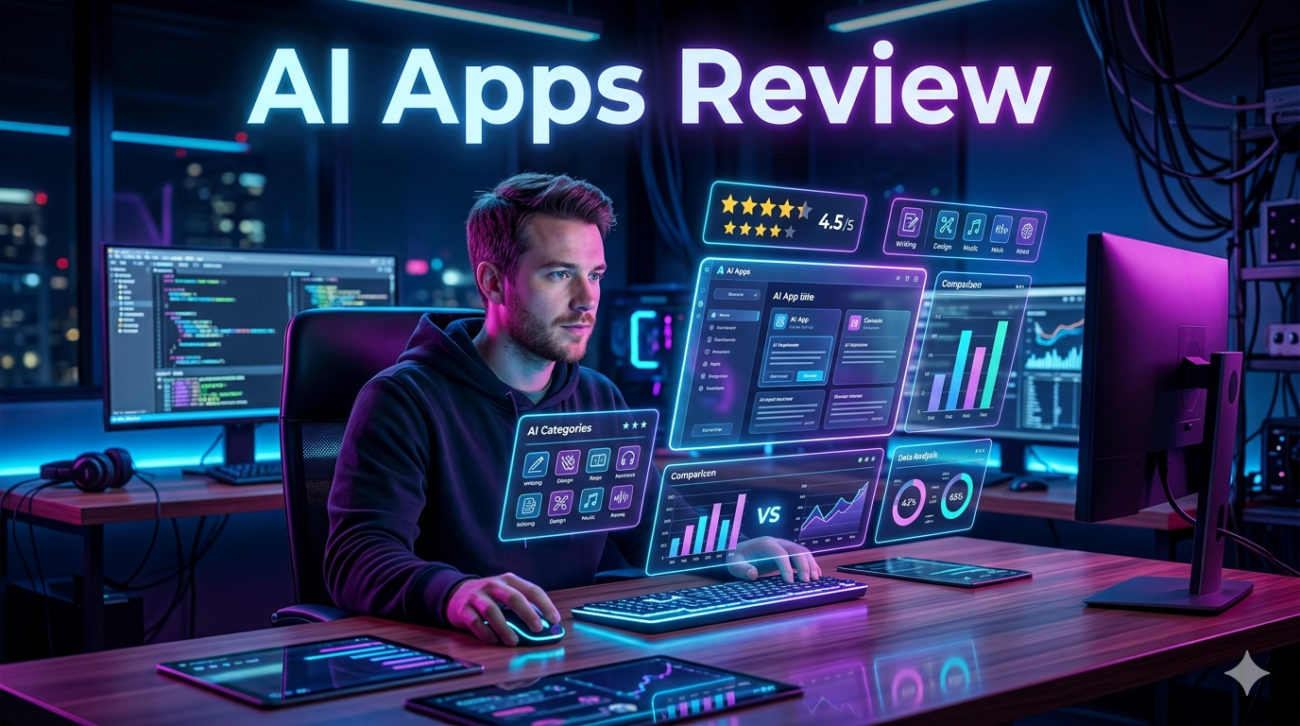
A couple of years ago, AI app meant a chat box that could write a quirky poem and occasionally hallucinate your company’s legal policy. Today, AI is woven into everyday workflows writing, meetings, design, coding, research, customer support, and even personal organization. The problem is that the app stores and SaaS marketplaces are now crowded with tools that promise the moon, charge a subscription, and deliver… a slightly smarter autocomplete.
I spend a lot of time testing these tools in real work contexts writing and editing, planning content, handling research, and supporting small teams that want AI without chaos. What follows is a practical AI apps review based on what consistently performs well, what’s risky, and what to look for before you commit your time and data. This isn’t a “top 50” list padded with affiliate links. It’s a field guide.
How I’m judging AI apps (and how you should, too)
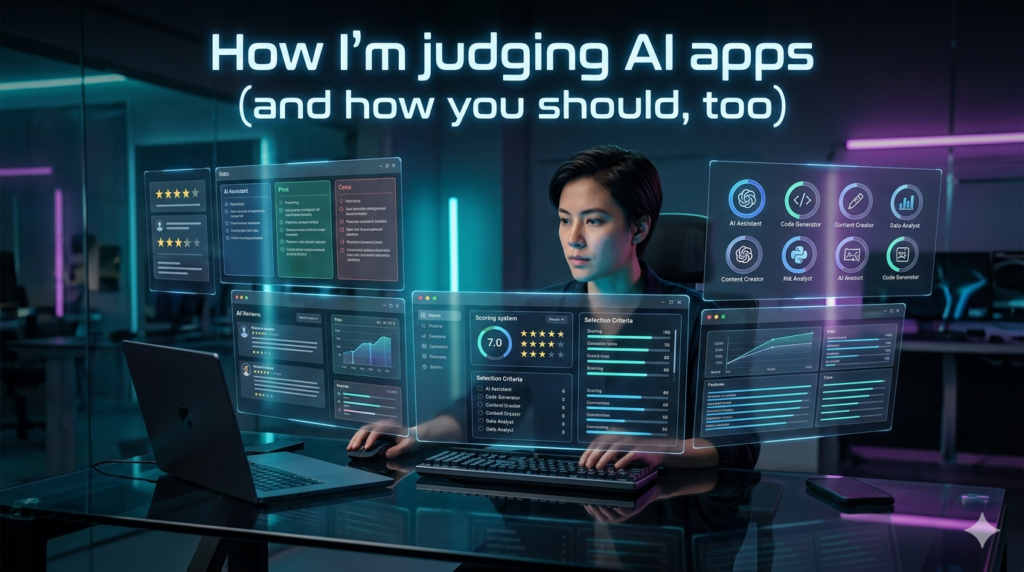
When I review AI apps, I’m not just asking “Is it impressive?” I’m asking:
- Does it reduce real work not just move it around?
Some apps generate content fast but create more editing, verification, and formatting downstream. - Can I trust it with my data?
The best AI apps now offer clear settings for privacy, data retention, and enterprise controls. Many still don’t. - How often does it get things subtly wrong?
The dangerous errors aren’t obvious hallucinations; they’re plausible mistakes a wrong date, a misquoted source, an invented metric. - Does it fit into existing tools?
The apps that win are the ones that integrate into email, docs, browsers, meeting platforms, IDEs, and CRMs. - Is pricing honest for how I’ll actually use it?
A $20/month tool is cheap if it replaces five hours of work. It’s expensive if you only use it twice.
Writing and editing AI apps (where the ROI is real)
ChatGPT / Claude / Gemini (general-purpose assistants)
For most people, the best AI app is still a general assistant because it’s flexible. I use them as a second brain: outlining, rewriting, creating drafts, generating interview questions, summarizing long documents, and turning rough notes into clean prose.
Where they shine
- Drafting and rewriting with tone control
- Brainstorming angles and structures
- Summaries of long, messy material
- Turning bullet points into polished writing
Where they can burn you
- Confidently inventing citations or facts
- Missing context from your organization
- Producing generic copy unless you guide it well
Practical tip: If you want consistently good output, build a habit of giving examples (“Write it like this paragraph…”) and supplying constraints (“No clichés, keep it under 120 words, include one counterpoint.”).
Grammarly (plus similar writing assistants)
Grammarly is less flashy than big chat assistants, but it’s one of the few tools I’ve seen adopted successfully by non-technical teams without constant retraining. It’s strongest in polishing: clarity, tone, correctness, and basic rewrite suggestions.
Best for
- Professionals writing high-stakes emails and documents
- Teams trying to standardize tone
- Non-native English writers
Limitations
- Not a deep research tool
- Can over-sanitize voice if you accept every suggestion
If your writing already has a strong personality (marketing, editorial), use it like a spellcheck-plus, not as a co-author.
Meeting and transcription AI apps (quietly becoming essential)
Otter, Fireflies, and similar “AI meeting note” apps
This category has improved dramatically. When it works, it saves real hours: transcripts, summaries, action items, searchable archives. I’ve seen small agencies and product teams reclaim time simply by reducing “Can someone take notes?” anxiety.
What to look for
- Speaker identification that’s actually accurate
- Easy export into Docs/Notion/Jira
- Clear consent and recording notifications
- Strong search across meetings
Real-world caveat: In sensitive environments (HR conversations, client negotiations, legal discussions), these tools can create privacy and compliance headaches. Always confirm your company policy and local recording laws.
Design and creative AI apps (powerful, but uneven)

Midjourney / DALL·E / Stable Diffusion tools
Image generation is both the most wow and the most misunderstood. For concepting, mood boards, fast social visuals, or placeholder art, it’s excellent. For brand-accurate production work, it’s still hit-or-miss unless you have a designer who knows how to guide prompts, curate results, and finish in Photoshop/Illustrator.
Best use cases
- Early-stage concept exploration
- Blog headers and illustrative assets (with caution)
- Rapid variations on an idea
Risks
- IP and licensing ambiguity depending on tool and training data policies
- Inconsistent style across a campaign
- Hidden cost: time spent iterating
My rule: If the image will represent a brand in paid campaigns, assume you’ll need human design oversight.
Canva (with AI features)
Canva’s AI features are valuable because they’re embedded in a tool teams already use. The magic is not perfect art generation it’s faster content assembly: resizing, copy suggestions, background changes, and quick variations.
Coding AI apps (huge productivity lift, but requires discipline)
GitHub Copilot / Cursor / AI-enabled IDEs
These are the AI apps that can genuinely change throughput especially for routine code, tests, refactoring, and learning unfamiliar frameworks. I’ve watched developers ship faster, but I’ve also watched teams inherit subtle bugs because nobody reviewed AI-written code with the same seriousness as human code.
Where they excel
- Boilerplate and repetitive patterns
- Unit tests and documentation
- Explaining unfamiliar codebases
- Fast prototyping
Where they fail
- Security-sensitive code (auth, crypto, permissions)
- Edge cases, performance bottlenecks
- Misunderstanding product requirements
Operational advice: Treat AI output like a junior developer: useful, fast, occasionally wrong, always in need of review.
Research and “answer engines” (good for speed, not authority)
A lot of AI apps now position themselves as research assistants some with citations, some without. They’re great for building an overview quickly, generating a reading list, or summarizing public documents. But if you’re making decisions based on the output (health, finance, legal, or executive strategy), you still need primary sources.
What I do in practice
- Use AI to map the landscape: terms, stakeholders, likely pros/cons
- Then verify with original reports, official documentation, and direct quotes
- Keep a source trail in my notes so I can defend claims later
If an AI app can’t reliably show where a statement came from, it’s not research it’s brainstorming.
The biggest red flags I see in AI apps
- No clear privacy policy or data retention controls
- Vague claims like “boost productivity by 10x” without specifics
- A demo that looks great, but real usage is clunky
- Output that’s polished but consistently shallow
- A tool that forces you to change your workflow instead of fitting into it
A simple framework to choose the right AI app (without wasting money)
Before subscribing, answer these:
- What task do I want to remove or speed up? (Example: “Summarize client calls into action items.”)
- What does success look like? (“I want notes in my CRM within 10 minutes.”)
- What’s unacceptable? (“It can’t store recordings permanently.”)
- Who owns the review step? (Someone must verify accuracy.)
- How will we measure impact? (Time saved, fewer errors, faster delivery.)
Then test only 2–3 tools for a week. Most people get “AI fatigue” because they install ten apps and master none.
Ethical and practical considerations (the stuff that matters later)
AI apps aren’t just software they’re systems that can leak data, introduce bias, and fabricate information with confidence. If you’re using AI in a workplace:
- Don’t paste confidential data into tools without approved policies.
- Disclose AI use when it affects clients, hiring decisions, or public claims.
- Maintain human accountability especially for anything legal, medical, or financial.
- Watch for automation complacency, where teams stop thinking critically because output looks polished.
Bottom line: The best AI apps are boring in the right way
The winners in this AI apps review aren’t necessarily the flashiest. They’re the tools that quietly save time every day, integrate cleanly, and don’t create new risks.
If you’re new to the space, start with one general assistant for writing/thinking, one meeting notes tool if you live in calls, and one embedded tool in your existing workflow (Docs, email, IDE, or design platform). Then expand only if you can clearly explain the next tool’s job.
FAQs
Q: What is the best AI app overall?
A: A general-purpose assistant is usually best for most people because it handles many tasks (drafting, summarizing, planning) in one place.
Q: Are AI writing apps safe for business use?
A: They can be, but only if you understand the app’s privacy policy and avoid sharing confidential or regulated data without approval.
Q: Do AI meeting note apps record everything I say?
A: Most transcribe and store audio/transcripts depending on settings. Check retention controls and always follow consent laws and workplace policy.
Q: Can AI design apps replace a designer?
A: Not reliably. They’re excellent for concepts and quick assets, but brand-consistent, campaign-ready work still needs human design judgment.
Q: Are AI coding tools worth it?
A: Yes for many developers, especially for boilerplate, tests, and refactoring but you must review for security, correctness, and performance.
Q: How do I avoid overpaying for AI subscriptions?
A: Pick one tool per workflow category, test for a week with clear goals, and cancel anything that doesn’t measurably save time or improve quality.
