
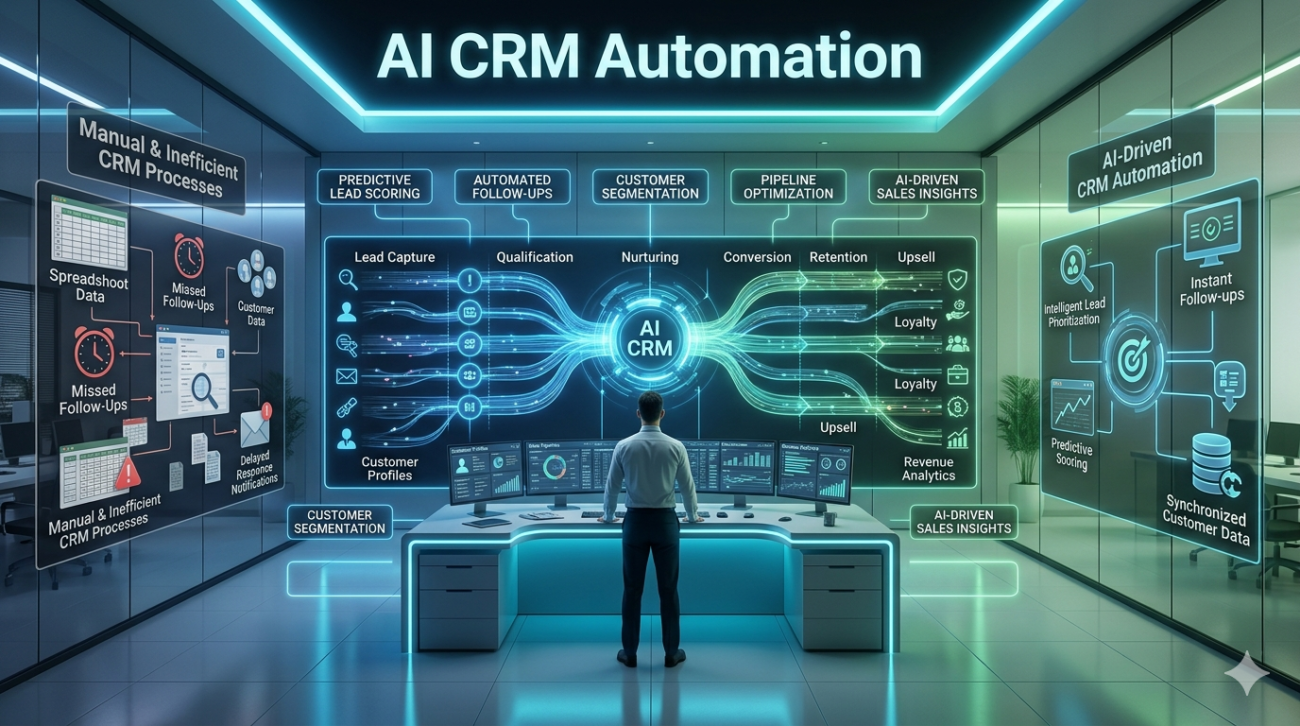
Running a business today means juggling countless tasks, and managing customer relationships often ends up at the bottom of the priority list. I’ve seen this play out in companies of all sizes from startups scrambling to keep up with incoming leads to established enterprises drowning in data they never seem to use effectively. The frustration is real, and the cost of ignoring customer relationships is even more real. That’s where AI CRM automation steps in, and honestly, it’s changing everything.
Over the past few years, I’ve watched artificial intelligence move from buzzword to genuine business necessity, particularly in how companies handle their customer relationship management. The technology has matured enough that it’s not just for tech giants anymore. Small businesses, marketing teams, sales professionals, and even customer service departments are discovering what AI can do when integrated into their CRM systems.
What Exactly is AI CRM Automation?
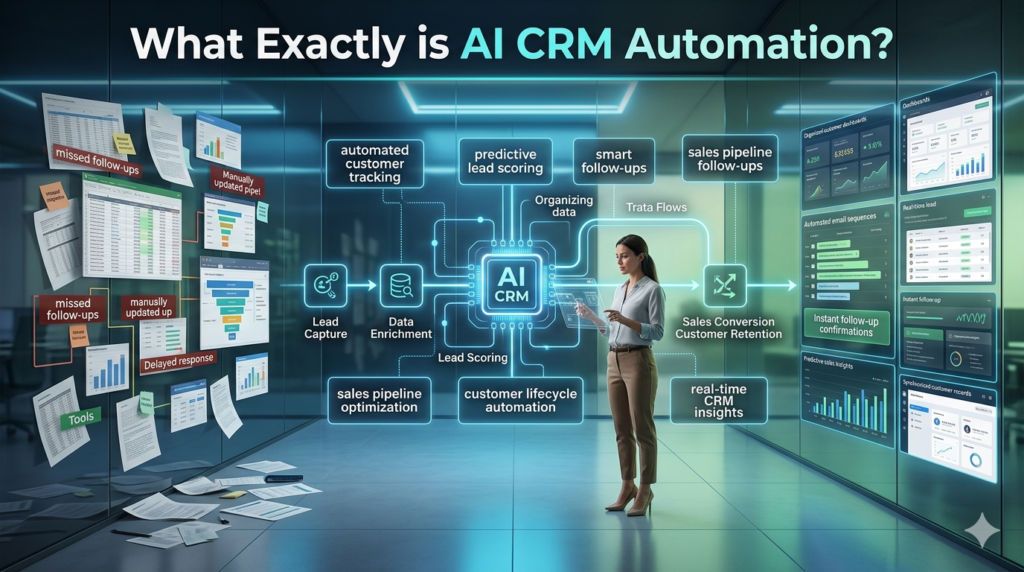
Let me break this down in plain terms. Traditional CRM systems think of platforms like Salesforce, HubSpot, or Soho store customer data, track interactions, and help teams manage contacts. They’re essentially digital Rolodexes on steroids. AI CRM automation takes that foundation and layers on machine learning capabilities that make the system actually intelligent. Instead of just recording that a customer emailed about pricing, an AI-powered CRM can analyze that email, categorize the intent, score the likelihood of purchase, and trigger appropriate follow-up actions automatically.
It can predict when a customer might be ready to buy, identify which leads deserve immediate attention, and even suggest personalized responses based on what’s worked in similar situations before. The key difference is that these systems learn and improve over time. The more data they process, the better they become at recognizing patterns and making useful recommendations.
Where AI Makes the Biggest Impact
Through my experience working with various businesses implementing these tools, I’ve noticed AI CRM automation delivering the most value in a few critical areas.
Lead scoring and prioritization; is probably the most immediate benefit. Sales teams spend enormous amounts of time deciding which leads to chase, often relying on gut instinct or outdated spreadsheets. AI changes this by analyzing hundreds of data points website behavior, email engagement, past purchase history, demographic information to score each lead objectively. One manufacturing company I worked with saw their sales team close rates improve by 34% after implementing AI-driven lead scoring. They stopped wasting time on low-quality prospects and focused their energy where it actually counted.
Automated follow-ups and communication: represent another game-changer. Most leads that don’t convert simply fall through the cracks due to human forgetfulness or bandwidth limitations. AI CRM automation can send perfectly timed emails, trigger SMS notifications, or alert sales reps when a prospect hasn’t engaged in a certain period. The system handles the routine so humans can focus on building relationships.
Customer segmentation: becomes infinitely more precise with AI handling the heavy lifting. Rather than creating broad segments based on simple criteria, AI can identify micro-segments based on behavioral patterns, preferences, and lifecycle stage. This means marketing campaigns hit harder because they’re genuinely relevant to each audience group.
The Real-World Challenges Nobody Talks About
I want to be honest here because this technology isn’t a magic solution. The biggest hurdle most companies face is data quality. AI systems are only as good as the information they receive, and many businesses have CRM databases stuffed with incomplete entries, duplicate records, and outdated information. One of my clients spent three months cleaning their data before they saw any meaningful results from their AI implementation. Integration complexity also catches many companies off guard. Your AI CRM needs to talk to your email system, your website analytics, your e-commerce platform, and probably several other tools.
The more disconnected systems you have, the less effective your AI becomes. I’ve seen implementations fail not because the AI technology was inadequate, but because the underlying data infrastructure was a mess. There’s also the human element to consider. Sales teams sometimes resist AI recommendations, viewing them as threatening rather than helpful. Successful implementations require genuine buy-in, which means showing your team how AI makes their jobs easier, not how it replaces them. The best approach is positioning AI as a tool that handles administrative tasks so salespeople can spend more time doing what they actually enjoy building relationships and closing deals.
Making the Right Choice for Your Business
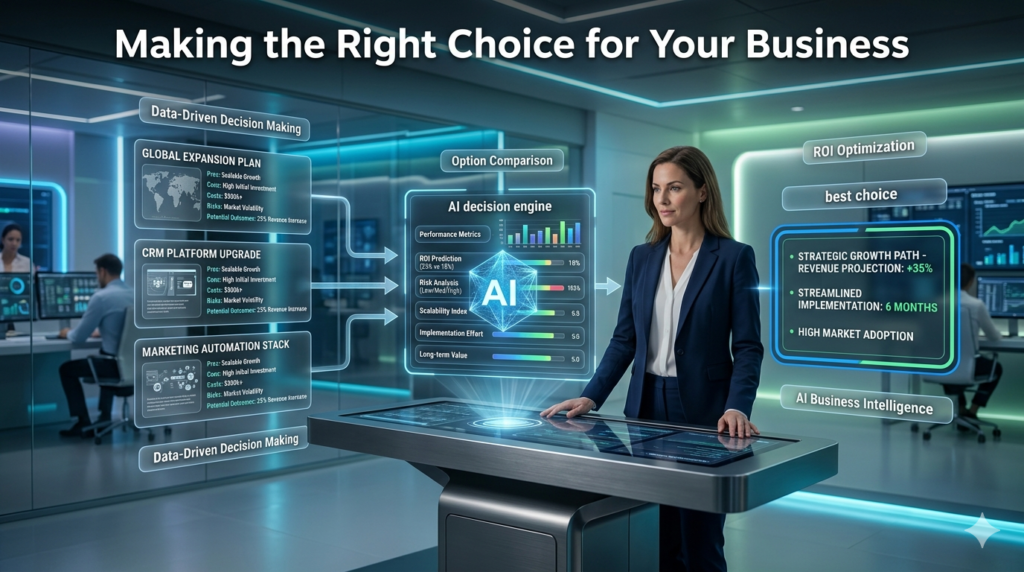
If you’re evaluating AI CRM automation platforms, focus on a few non-negotiables. First, the system should integrate with tools you already use. Second, look for platforms that offer transparent AI explanations you should understand why the system recommends certain actions. Third, consider the vendor’s customer support and training resources. The most sophisticated AI means nothing if your team can’t actually use it.
Pricing varies dramatically across the market. Some platforms charge per-user fees, others use consumption-based models where you pay for what you use. Enterprise solutions often bundle AI capabilities into comprehensive packages, while smaller businesses can access powerful features through more affordable tiers. The key is understanding what you actually need versus what sounds impressive in a sales demo.
Looking Ahead
The trajectory of AI CRM automation points toward increasingly sophisticated capabilities. Natural language processing is making chatbots and virtual assistants more conversational and genuinely useful. Predictive analytics are getting better at forecasting customer lifetime value, churn probability, and optimal engagement timing. We’re moving toward systems that don’t just react to customer behavior but anticipate needs before customers even realize them themselves.
For businesses willing to invest the time in proper implementation and data management, the rewards are substantial. Higher conversion rates, better customer retention, more efficient operations, and valuable insights that inform strategic decisions. The companies thriving in today’s competitive landscape are those using AI not to replace human connection, but to create space for more meaningful customer interactions.
FAQs
Q: How long does it take to see results from AI CRM automation?
A: Most businesses see initial improvements within 4-8 weeks, particularly in lead scoring accuracy and automated task handling. Full benefits, including predictive insights and advanced personalization, typically emerge after 3-6 months when the system has gathered enough data to learn effectively.
Q: Do I need technical expertise to use AI CRM tools?
A: No. Most modern AI CRM platforms are designed for non-technical users with intuitive interfaces, drag-and-drop automation builders, and guided setup processes. However, getting maximum value from advanced features may benefit from some training or consultant support during initial setup.
Q: What’s the difference between AI automation and basic CRM automation?
A: Basic CRM automation follows rule-based triggers (if X happens, do Y). AI automation adds intelligence learning from patterns, making predictions, personalizing content, and continuously optimizing based on outcomes. It’s the difference between automation that follows instructions and automation that gets smarter over time.
Q: Can AI CRM replace human salespeople?
A: Not even close. AI excels at processing data, identifying patterns, and handling routine tasks. What it cannot replicate is human intuition, emotional intelligence, and relationship-building skills. The best implementations use AI to support salespeople, not replace them.
Q: Is my customer data safe with AI CRM systems?
A: Reputable platforms invest heavily in security with encryption, compliance certifications (SOC 2, GDPR), and regular security audits. However, data safety depends partly on your practices strong passwords, controlled access, and following vendor security recommendations are essential.
